
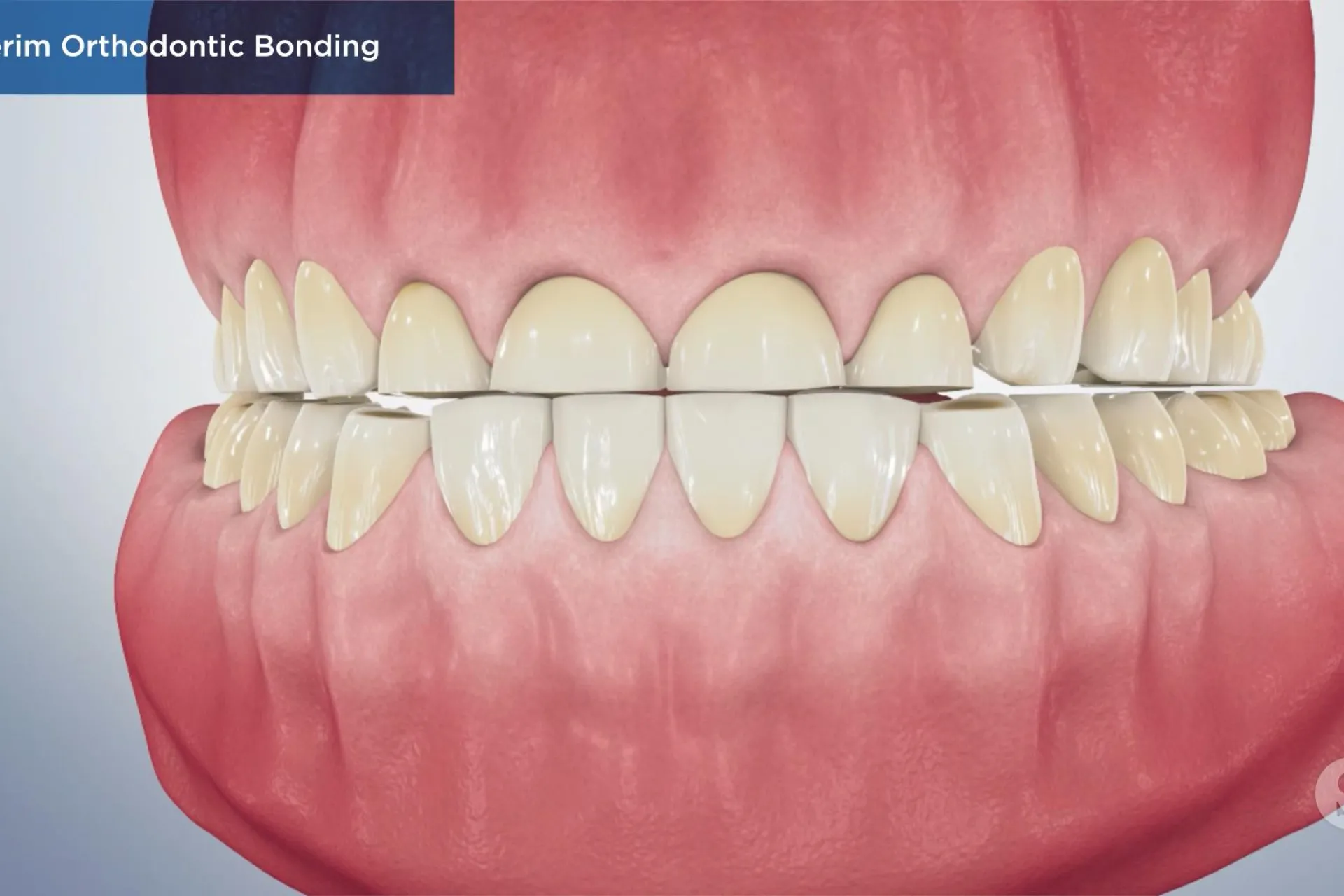
Interim Orthodontic Bonding
When front teeth wear, they can change position. Your doctor may recommend having an orthodontist move the teeth into a better position before they are restored.
Orthodontic bonding is a procedure that involves temporarily attaching composite resin or provisional crowns to teeth to improve their shape or alignment.
By reshaping the teeth to their original condition using a temporary material, your doctor can help the orthodontist know how your smile should look, and how your teeth fit together as they complete your case.
Ideally, the bonding is done before your treatment begins but, in some cases, pre-orthodontic bonding may not be recommended.
In these cases, your doctor may suggest interim orthodontic bonding.
This is when orthodontic treatment is started and progresses to the point where teeth are in a better position to bond. When is this a preferred choice?
One example is when there are severely crowded teeth, so there isn’t enough room to shape them to ideal proportions.
Also, if there are narrow teeth that are up against adjacent teeth.
Your orthodontist may need to move the teeth apart in order to make small spaces between the teeth before bonding can occur.
In the case of an extremely deep bite, pre-orthodontic bonding might open the bite too much for your comfort, or for ideal orthodontic treatment.
Finally, there are cases where teeth are worn but the incisal edge position in your smile has not changed.
In this example, pre-orthodontic bonding could make the teeth look too long.
In these situations, once the initial movement is complete.
The braces on the teeth that require interim treatment are removed.
Provisional bonding is added.
And the brackets replaced.
Or, if clear aligners are being used, your mouth will be rescanned and new trays created.
Interim bonding can play an important role in achieving the best outcome for your restorative treatment.
Your doctor will explain more about which options might work best for you.