
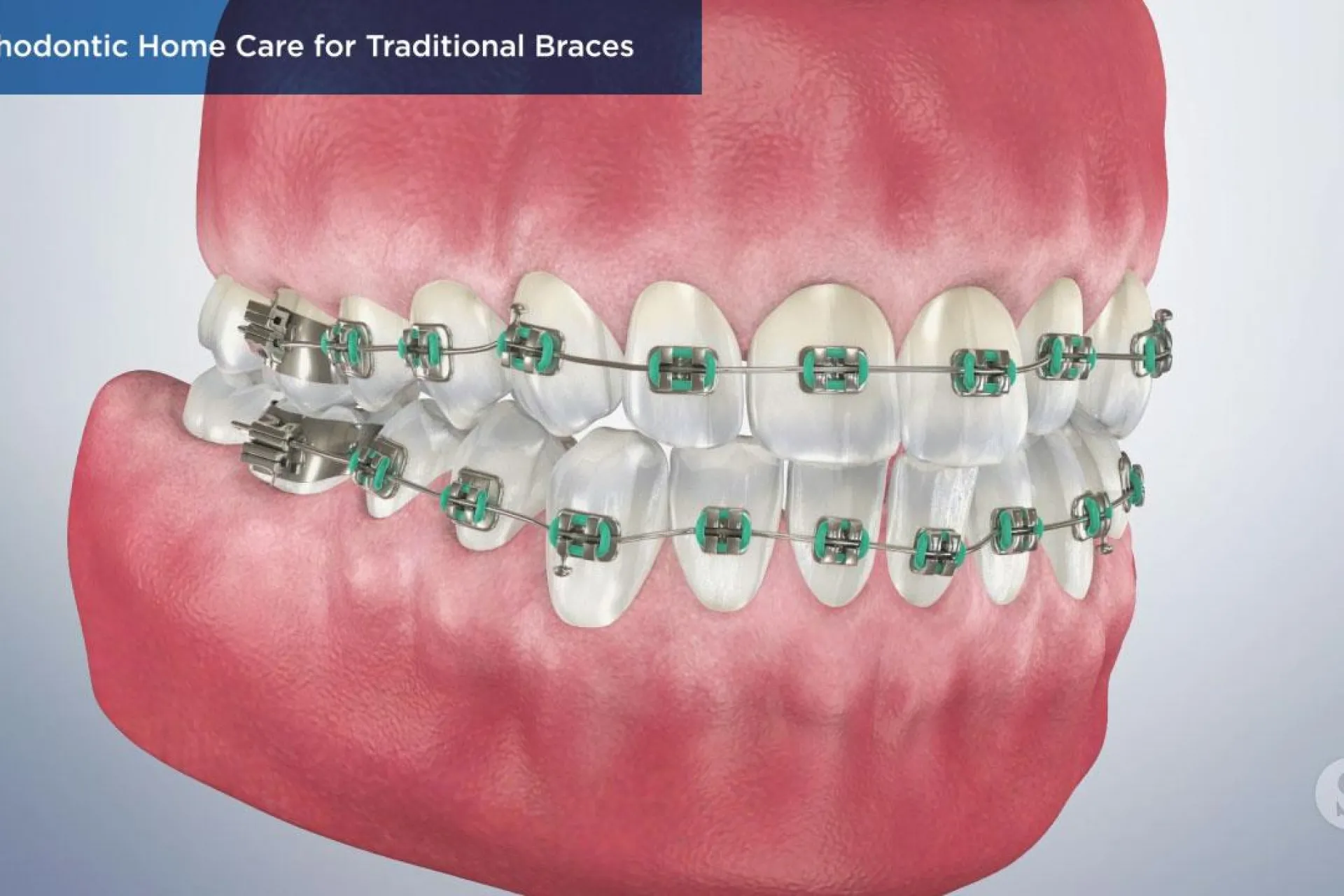
Orthodontic Home Care for Traditional Braces
After traditional or lingual braces have been placed, daily home care is more important than ever for keeping your teeth healthy and your braces functioning correctly during treatment.
Poor oral hygiene while wearing braces can lead to gum disease and permanent staining of the teeth. It could also extend treatment time and add to expenses.
Throughout your orthodontic treatment, avoid eating hard, chewy or sticky foods to avoid damaging the brackets.
Soft drinks, including regular and diet soda pop, fruit drinks, sports drinks and energy drinks, weaken tooth enamel and should be eliminated as well. Ask your doctor for a complete list of foods to avoid during treatment.
Also, do not chew on hard objects like ice cubes and pencils as these can damage your braces.
You should brush and floss after every meal taking extra care to brush your teeth and around your braces to dislodge food and to keep free of plaque buildup and decay. Use a soft-bristled brush and a fluoride toothpaste for best results.
Carry your toothbrush and toothpaste with you in a travel kit for on-the-go brushing.
Flossing is also critical after every meal. Use floss or an interdental brush to clean in between neighboring teeth and around wires and brackets.
Especially helpful is a water flosser that sprays a steady stream of water in between teeth, brackets and hard to reach areas to eliminate remaining food and plaque.
Some doctors prescribe or recommend a fluoride mouthwash, which can get into places a toothbrush can't.
Your doctor will recommend and demonstrate any specific cleaning aids you may need for home care.
If you play contact sports, make sure to talk to your doctor about precautions such as a mouth guard to protect your teeth and braces.
If you feel irritation from the wire ends that may poke your mouth, place wax around the wire or brackets to minimize discomfort.
Regular dental hygiene cleanings and checkups are a must when wearing braces. And remember to keep all your orthodontic follow-up appointments.
At any time during your treatment, if you experience severe pain, a loose bracket or band, or a broken wire, it is important to contact your doctor’s office for assistance.