
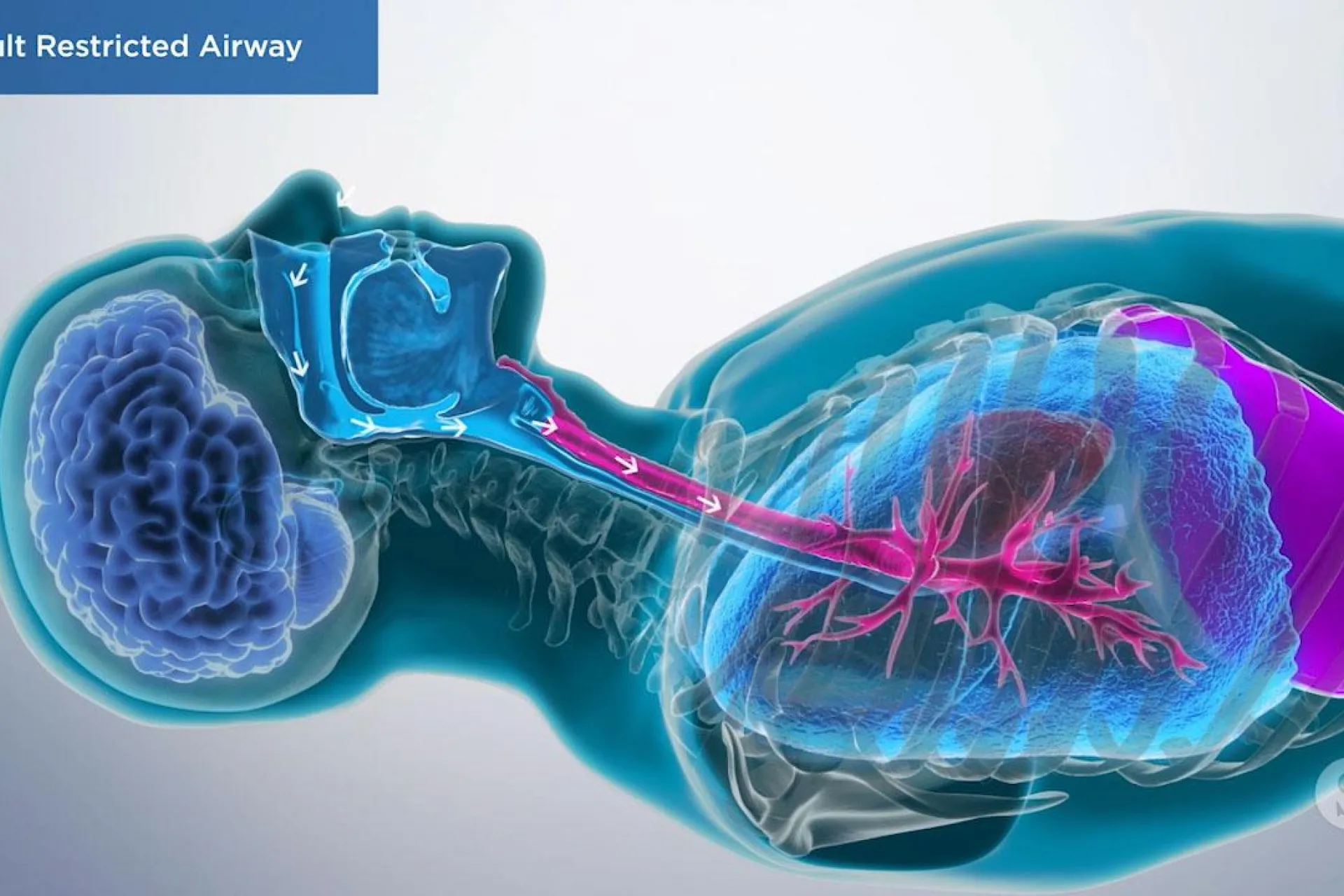
Adult Restricted Airway
Proper breathing is critical to a person’s health. Having an upper airway that lets oxygen flow freely into and out of the lungs is necessary for overall well-being. But, if the upper breathing passages are narrow or blocked, it makes breathing more difficult. During sleep a lack of the necessary oxygen puts a strain on the heart and brain and may cause complications.
Your dental provider plays a crucial role in identifying airway problems. They are often the first health professional to identify airway dysfunction because of the signs that can be observed within the mouth.
A person’s airway may be restricted due to certain anatomic features, such as a small mouth or throat, overly large tonsils or adenoids or an elongated uvula and soft palate.
A blockage of the upper airway during sleep is often due to the relaxation of the tongue and soft palate moving to the back of the oral cavity.
The potential signs of a restricted airway include tooth grinding, tooth wear, tooth decay, having crowded teeth, nasal issues, obesity, mouth breathing and snoring. Often, treating a dental issue, like grinding or tooth wear, will simultaneously improve a patient’s airway and sleep quality and lead to an improved quality of life.
If left untreated, the constant strain placed on the heart and brain, coupled with poor sleep quality, can result in insomnia, chronic fatigue syndrome, fibromyalgia, gastrointestinal issues, depression, anxiety, nighttime teeth grinding, and cardiovascular difficulties like high blood pressure and stroke.
Given the potentially serious complications, it is critical to work closely with your doctor to screen for airway issues and develop a treatment plan that meets your unique needs.